वारलीWarli · Maharashtra
Assignment III · Regional Painting Fusion

Saṅgam

where two rivers of painting meet

కలంకారీKalamkari · Andhra Pradesh

Two rivers, one confluence.

One tradition draws the world with a few white lines on a mud wall. The other floods cotton with plant dyes in dozens of patient stages. Saṅgam — Sanskrit for the meeting of rivers — asks what happens when they flow together.

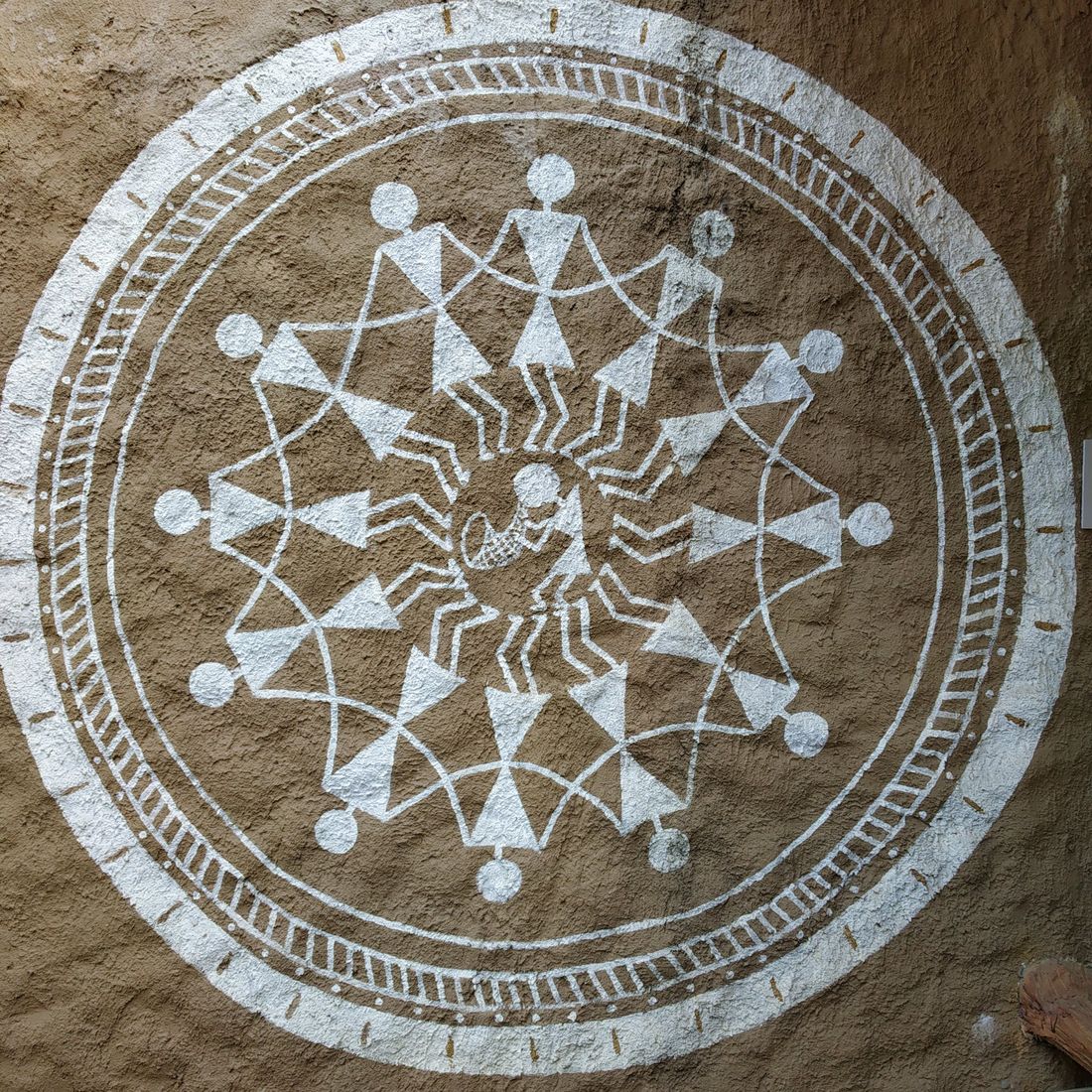
A Warli painting of the tarpa dance circle in white on a mud wall
वारली

Warli

The Warli people of the Sahyadri foothills paint their lives — dances, harvests, weddings, forests — in a grammar of just three shapes.

Region
Palghar, Dahanu, Talasari and Jawhar, north Maharashtra
Makers
The Warli Adivasi community; traditionally women painted for weddings, and Jivya Soma Mashe took the art onto paper in the 1970s
Surface
Hut walls plastered with mud, cow-dung and red ochre (geru)
Medium
Rice paste mixed with water and gum, applied with a chewed bamboo stick
Shapes
Circle (sun, moon), triangle (mountains, trees, the human body), square (the sacred chauk)
Palette
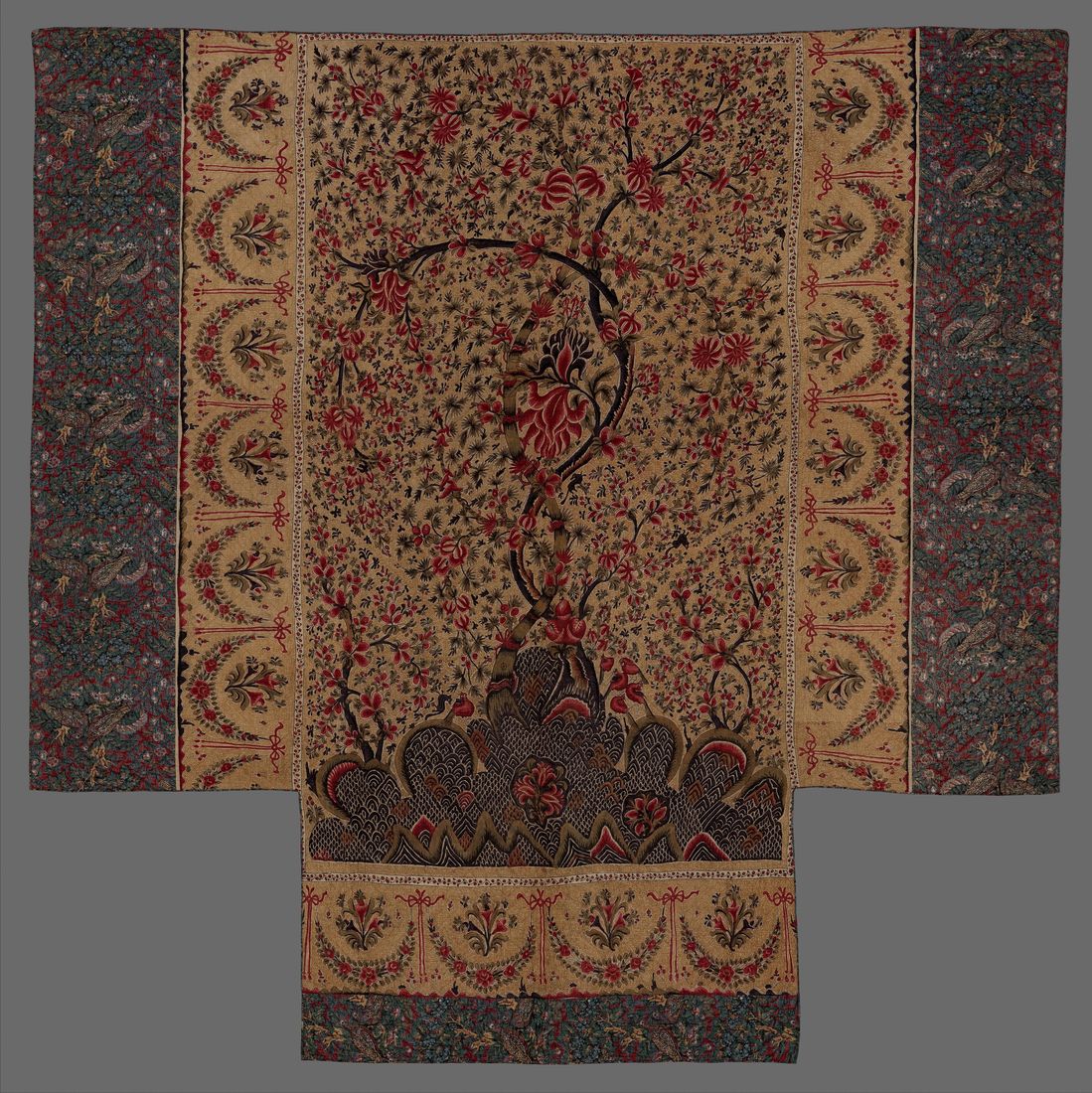
A painted and dyed cotton palampore with a flowering Tree of Life
కలంకారీ

Kalamkari

'Pen-work' in Persian: cotton drawn with a bamboo kalam and dyed with plants and minerals — from temple epics to the Tree of Life palampores loved across the world.

Region
Srikalahasti (freehand pen style) and Machilipatnam–Pedana (block-printed), Andhra Pradesh
Makers
Hereditary artisan families; Coromandel-coast workshops exported painted cottons to Europe and Southeast Asia
Surface
Cotton cloth soaked in myrobalan and buffalo milk
Medium
Mordants (alum, iron), madder / chay root, indigo, myrobalan — up to 17 stages of dyeing and washing
Motifs
Tree of Life, lotus, peacock, paisley (mango), epic narratives and deities
Palette

Similar at heart, different in hand.

Click a part of the diagram to see what belongs only to Warli, only to Kalamkari, and what the two already share — the common ground on which our fusion is built.

WarliKalamkariIn our Saṅgam
LineShort, straight, geometric strokesLong, flowing curves drawn with the kalamWarli geometry for people and animals; Kalamkari curves for plants and borders
ColourOne colour — rice-white on geruMany — madder, indigo, mustard, green, iron-blackA geru field inside a cream Kalamkari frame; colour flows only through the tree and the fused motifs
FiguresTwo triangles and a circle, always in motionDetailed, ornamented, often gods and heroesWarli dancers — some wearing Kalamkari-patterned skirts
NatureStick trees, birds, animals of the forestThe flowering Tree of Life, peacocks, parrots, lotusA Kalamkari Tree of Life that grows from a Warli dance circle
SpaceFigures float on the wall, no ground lineFramed fields, borders and archesA palampore layout: arch, spandrels and border, filled with Warli life
MeaningCommunity, harvest, marriage, the goddess PalaghataDevotion, epic stories, abundanceThe cycle of life: the circle of dancers and the tree it nourishes

How we fused them.

A fusion is only convincing if it has rules. We gave each tradition the job it does best, then let them trade motifs where they already share a meaning.

01

Warli draws the living

Every human and animal is built from Warli's circle and two triangles, drawn in rice-white — dancers, farmers, deer and bullocks.

Warli grammar
02

Kalamkari grows the plants

Trees, flowers, leaves and the frame use the kalam's flowing line and the natural-dye palette: madder, indigo, myrobalan yellow, iron-black.

Kalamkari line & dye
03

Find the shared symbol

Both traditions picture life as a cycle — the Warli tarpa spiral and the Kalamkari Tree of Life. So the tree grows from the centre of the dance.

Common meaning
04

Cross-pollinate

Warli sun rays become Kalamkari petals; dancers wear madder and indigo patterns; the tree bears Warli circle-fruit; a Warli frieze runs inside the border.

Fusion motifs
05

Compose as a palampore

The layout borrows the palampore: an arched field, indigo spandrels and a flowering border — filled with the everyday world of a Warli village.

Composition
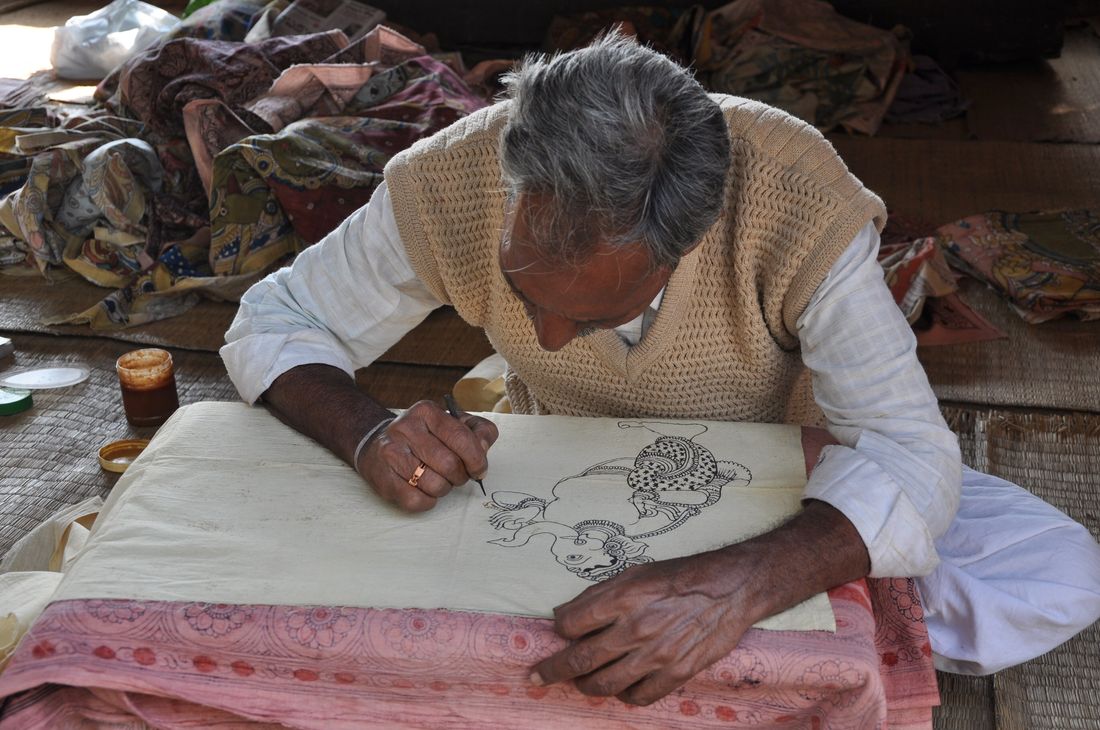
A Kalamkari artist drawing on cloth with a bamboo pen
Drawing with the kalam, Srikalahasti —
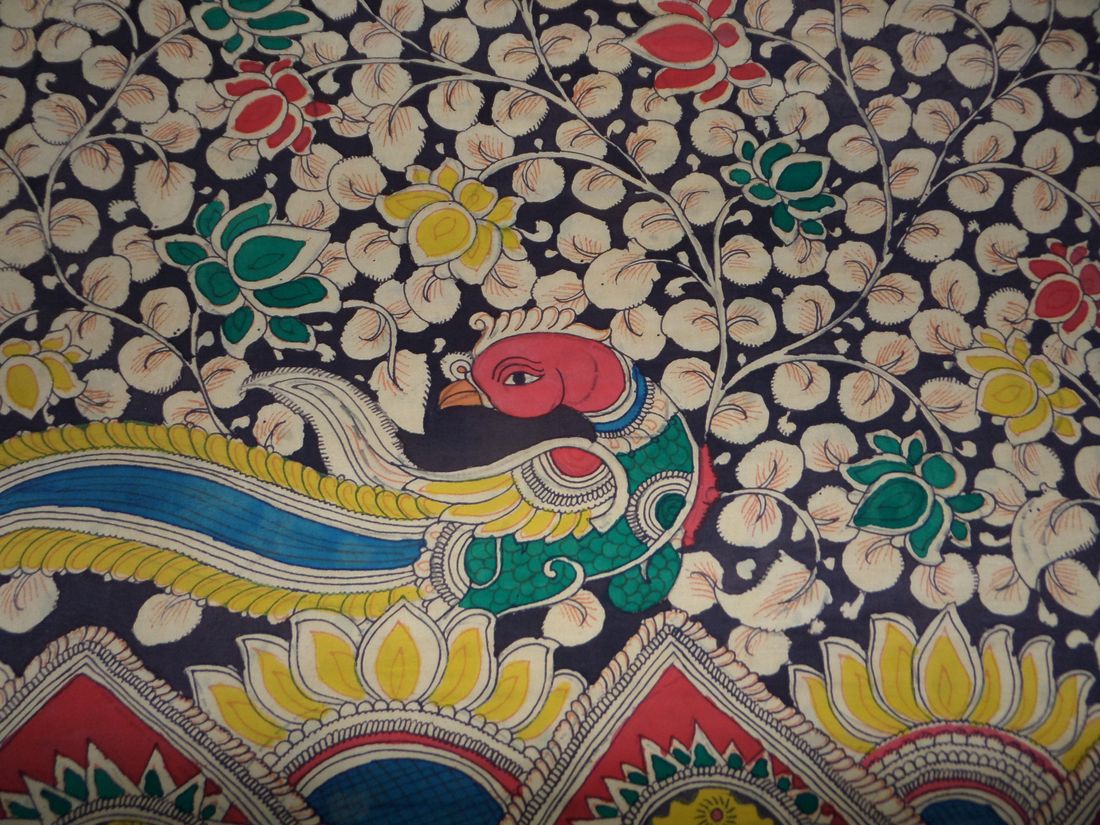
Detail of hand-painted Kalamkari cloth with a peacock and flowers
Hand-painted Kalamkari detail —

Now make your own saṅgam.

A small fusion studio: place Warli figures, Kalamkari motifs and fused stamps on a wall or cloth, then drag, resize and rotate them. Download the result as an image.

Stamps — Warli · Kalamkari · Fusion

Ground

Border

Pick a Warli figure and a Kalamkari motif
to begin your own saṅgam.
About this project

Exploring similarity, difference and creative synthesis.

Assignment
III · Regional Painting Fusion Project — CLA-I, 10 marks · Course outcome CO2
Objective
To explore the similarities and differences between regional painting styles and encourage creative synthesis, by creating an artwork that combines elements of two styles.
Styles fused
Warli (Maharashtra) — the geometric patterns suggested in the brief — with the intricate, dyed line of Kalamkari (Andhra Pradesh).
The artwork
“The Tree of Life and the Tarpa Dance” (2026), an original digital painting drawn as layered SVG vector art with custom code, so it can be deconstructed layer by layer and printed at any size.
Materials
Digital painting tools: hand-written SVG and JavaScript (with GSAP for motion). Reference photographs from Wikimedia Commons, credited on the credits page.